Grupos Religiosos
Na seção a seguir você encontrará informações sobre atividades de campanhas de grupos religiosos no nível internacional, nacional e regional.
Seventy percent of the world’s people identify themselves as members of a religious community – and a majority of those living with HIV are people of faith. Their faith helps to shape how they perceive themselves and the world around them and how they respond to their neighbours in need near and far.
People of faith and faith-based organisations have been at the forefront of the response to HIV and AIDS since the early 1980s, by engaging in practical health care, social and emotional support, pastoral care and advocacy with and for those living with the virus in order to eliminate stigma and discrimination and to promote access to treatment for all those living with or affected by HIV. In some countries, particularly in Africa, the majority of health services are provided by faith-based organisations, and often, it is faith-based groups that are present and serving the poorest and most vulnerable communities around the world.
Unfortunately, as is the case in many other sectors, there also have been negative and destructive actions by some religious leaders - pronouncements of judgment, dissemination of inaccurate information, promotion of stigma and discrimination – and silence. The inability of many faith-based groups to openly discuss sexuality and other complexities of HIV and AIDS has prevented individuals and families from gaining the information and support they desperately need and has added to the stigma and discrimination faced by too many people living with or affected by HIV and AIDS.
Yet more and more people of faith recognise that we are all affected by HIV and AIDS and they are leading not only in the care and support of those affected, but also in advocating for accountability, compassion and effectiveness within religious communities, among civil society, and in national and international political and economic arenas.
Why is leadership important from the faith-based sector?
Probably more than any other type of institution, faith-based organisations are found in every community and touch the daily lives of billions of people around the world. Religious leaders at local, national and international levels are looked to for spiritual, emotional, and practical guidance, support, and hope. This is a heavy responsibility, and one that has to be taken humbly but with conviction and commitment to truth and with a vision of harmony and justice for all the world’s people.
There are obvious examples of religious leaders whose words and actions influence thousands if not millions of adherents. Many religious organisations have made statements on their response to HIV and AIDS and been strong advocates to end discrimination, provide access to treatment and care for all, encourage sustainable and sufficient funding for the global response, promote prevention, and address the root causes of vulnerabilities, particularly for women and children.
There are many more quiet “servant leaders” who have seen people’s needs in their community and work tirelessly to provide medical, practical and pastoral support as well as advocate for people’s rights.
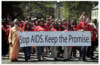
Many religious leaders, communities and people of faith have made commitments and promises and recognise that these must be kept, such as:
- Ending stigma and discrimination, and promoting the dignity and rights of people living with and affected by HIV or AIDS.
- Promoting HIV and AIDS prevention activities that address root causes of vulnerability, with particular attention to women and children.
- Mobilising sufficient and sustained funding to reach universal access to prevention, treatment, care and support.
- Putting words into action, and setting clear and transparent targets to hold each other accountable in our efforts to stop the spread of HIV and eradicate AIDS from our world.
To read more about faith taking the lead to stop AIDS, please see below.
|